NOTHING LESS THAN LITERAL

NOTHING LESS THAN LITERAL

ARCHITECTURE AFTER MINIMALISM

LINDER, MARK

S/. 95,00
IVA incluido
Editorial:
MIT PRESS
Año de edición:
2004
Materia
Teoría de la arquitectura
ISBN:
978-0-262-62208-0
Páginas:
282

Disponibilidad:

  • Sede Central MirafloresÚltimo ej. Consulta mensaje WA 950511560
  • Sede Centro de LimaNo disponible. Consultar vía WhatsApp
S/. 95,00
IVA incluido
Añadir a favoritos

In "Nothing Less than Literal," Mark Linder shows how minimalist art of the 1960s was infiltrated by architecture, resulting in a reconfiguration of the disciplines of both art and architecture. Linder traces the exchange of concepts and techniques between architecture and art through a reading of the work of critics Clement Greenberg, Colin Rowe, Michael Fried, and the artist-writer Robert Smithson, and then locates a recuperation of "the architecture of minimalism" in the contemporary work of John Hejduk and Frank Gehry. "Literal" was not only a term used by Fried to attack minimalism; it was a key term for Greenberg as well, and in both cases their use of that term coincides with discussions of the architectural qualities of art. Linder gives us the first thorough examination of the role that architectural concepts, techniques of representation, and practices played in the emergence of minimalism. Beginning with a comparison of the "postcubist" writings of Clement Greenberg and Colin Rowe, he reveals surprising affinities in their critical formulations of pictorialism--including the use by both of an analogy between cubist collage and architectural space. This is followed by an account of the sharp differences between Michael Fried and Robert Smithson; Linder contrasts the sublimation of space and refusal of architecture in Fried's concept of the "radically abstract" with Smithson's explicit embrace of architectural thinking and his complex concepts of space. Finally, Linder looks at particular instances in the work of two architects who, through collaboration with artists, engaged the legacy of literalism--John Hejduk's Wall House and Frank Gehry's decade-long fascination with the figure of the fish. Linder shows how the "productive impropriety" of transdisciplinary borrowing in the discourses surrounding minimalism serves as a counterexample to the prevalent perception of "disciplines" as conservative and institutionalizing.
Artículos relacionados

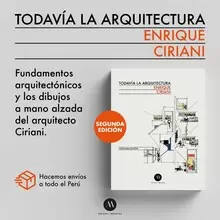
  • TODAVIA LA ARQUITECTURA. 2DA EDICION
    CIRIANI, ENRIQUE
    ¿Es posible resumir más de cincuenta años de trayectoria de un arquitecto como Enrique Ciriani? A parte de actualizar los principios del movimiento moderno, en Perú, Francia y Holanda, la relevancia de su carrera se cimienta en su internacionalmente reconocida práctica pedagógica. Reuniendo el pensamiento de Ciriani relativo a la disciplina desde su práctica y su pedagogía, est...

    S/. 100,00S/. 80,00

  • ROMÁN BAUER ARQUITECTURAS ERRANTES
    ROMAN, AUGUSTO / BAUER, JOSE
    La idea de una edificación permanente es, naturalmente, ficticia; todo se degrada, con mayor omenor rapidez, y por lo tanto todo es temporal en mayor o menor medida. También es temporalel uso que les damos a los edificios y los espacios urbanos y no es menos temporal nuestro pasopor el mundo. Quizás para contrarrestar esta fugacidad, la arquitectura suele proveer la ilusiónde p...

    S/. 60,00

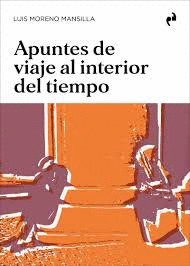
  • APUNTES DE VIAJE AL INTERIOR DEL TIEMPO
    LUIS MORENO MANSILLA (AUTOR)
    Apuntes de viaje al interior del tiempo es una suerte de ars memoriae de Luis Moreno Mansilla, un libro extraordinario que tiene su origen los dos años que el autor fue pensionado en la Real Academia Española de Bellas Artes en Roma. Desechando, por inabarcable, la idea de seguir el rastro de los arquitectos que habian viajado a Italia, selecciono unos cuantos por el interes qu...

    S/. 175,00

  • GUÍA VISUAL DE LA ARQUITECTURA EN LA EDAD MEDIA II
    LORENZO DE LA PLAZA ESCUDERO / JOSÉ MARÍA MARTÍNEZ MURILLO / JAVIER LIZASOAIN HERNÁNDEZ (AUTOR)
    Esta obra centrada en el Románico continúa la estela de los volúmenes "Guía visual de la arquitectura del Mundo Antiguo" y "Guía visual de la arquitectura en la Edad Media I". Este período, que se inicia en torno al año 1000, supone una consolidación de los modelos previos, donde el protagonista esencial en la arquitectura sigue siendo la "casa de Dios". La obra se mueve en un ...

    S/. 135,00

  • DIÁLOGOS SOBRE ARQUITECTURA Y DISEÑO
    MIJARES BRACHO, CARLOS / GONZALEZ DE LEÓN, TEODORO
    Este libro es un compendio de entrevistas con arquitectos y disen~adores de la escena mexicana, realizadas a lo largo de 20 an~os. La extensio´n de los momentos en que se llevaron a cabo permitio´ conversaciones profundas sobre su pensamiento, influencias, obras y colaboradores. Son, sobre todo, un reflejo de diversos momentos de la vida arquitecto´nica y del disen~o en el pai´...

    S/. 95,00

  • SUPERSTUDIO.LA VIDA SECRETA DEL MONUMENTO CONTINUO
    Fundado en 1966 por Adolfo Natalini y Cristiano Toraldo di Francia, a los que más tarde se unieron Gian Piero Frassinelli, Roberto y Alessandro Magris y Alessandro Poli, Superstudio fue uno de los grupos más influyentes de la llamada arquitectura radical. El grupo nació en un momento fructífero de crisis marcado por la trágica inundación de Florencia de 1966 y por las fuertes t...

    S/. 92,00